Belly of the beast - Ab training for a tight and strong midsection

This is an article I really did not want to write, but the subject is one I am asked about repeatedly. People love abs it seems. It also seems, at least from the general fuckery I witness in the gym on daily basis, that most people have no idea how to effectively train or use their abs.

Expect a lot of this - I had to keep myself somewhat interested in writing this article
Expect a little bit of this - I have to keep the girls and gay dudes that read this interested

I hate ab training. I hate the term 'core'. I hate people asking me how they 'tighten' up around the middle. I hate a lot of things. However, sometimes we all have to deal with things we hate, so what follows will be my best effort of answering all the questions I hate, using lots of terminology I hate.

I also hate Star Wars, but I'd probably get on well with this guy

Let's get one thing out of the way right off the bat - having visible, defined abs (or defined any-muscle) is a body fat issue. If all you want is to look in the mirror and see a six-pack, you need to reduce your body fat. How exactly to do that is an issue for another day, but getting your diet in check, regularly lifting and maybe throwing in some conditioning work, in that order, will set you on the right path. Proper ab training will cause hypertrophy of the underlying muscles which will help with visibility to some degree, but laying on the gym floor doing hundreds of crunches does not a six-pack make (not to mention that crunches are a shitty exercise). While I'm ranting I might as well also throw out a (hopefully unnecessary) word of warning against any sort of low-effort-required miracle ab bestowing fitness contraption. Nothing comes without due effort in this game, if something is being sold to you on the premise that it is quick and easy, you can bet your ass that it won't do a damn thing.

If this stuff was easy, more people would look like this.
This article is going to contain a quick primer on what exactly composes the front mid-section of our bodies, a discussion on the actual use of having decent abs (apart from being pretty), a bit about posture, how to utilise intra-abdominal pressure (IAP) to stabilise the midsection during heavy lifts and finally some ab exercises which don't suck. That's a fair bit to get through so I'll stop airing my grievances with the world and start spouting some knowledge.

Mid-section physiology and function

Whilst 'core' is (unsurprisingly) not a recognised anatomical term, most that use it are referring to the entire front side of the mid-section. That is, the six-pack in the front (rectus abdominis), the internal and external obliques, transverse abdominis and serratus; yeah... anatomy. For ease I'll be using 'abs' or 'core' for the most part from here on to refer to all the above, I might also be able to bring myself to drop the inverted commas and accept these terms. The exercises we will focus on will hit all the front and side muscles, proper IAP will also utilise all the deep abdominal, diaphragmatic and spinal erector muscles for complete 'core' work.

There are better things to look at in this picture than the caption

The function of abs are to act as a brace for the middle of the body (along with the spinal erectors), they aren't there to move any weight per se - no one talks about their one rep max leg raise - instead the muscles of the mid-section act as a bridge between the upper and lower body, stabilising our structure where it is weakest. If you look at a human skeleton, there is the solid structure of the rib cage above and the solid structure of the pelvis below, between these there is just the spine, which seems pretty flimsy when you really look at it. Now imagine that skeleton has a significant load being carried in its arms, across its shoulders or overhead; that link between the ribs and the pelvis is going to need some extra stabilisation if it is going to stay solid, hence the need for some solid abs.
Strong, visible abs: providing stability whilst also letting people know you are better than them

Now some will think that all you need to do to keep that core strong is to put heavy weights on your back and overhead (in other words, lift heavy on the compound exercises) and there is no need to train the abs directly. Well, yes and no. Training heavy on compound lifts like squats, deadlifts, overhead presses and pull-ups is an extremely effective way to build strength and muscle in the core, however most trainees past the beginner stage need more. In a perfect world, heavy lifts would be all we need to train the midsection as we would get under a squat, engage the core (more on this later) and the load would be perfectly shared between the musculature, left to right and front to back, everything would be equally trained and we would be happy about life. Of course, this isn't a perfect world and most of us are shitty excuses for humans. As such, most of us have messed up postures with overly tight lower back muscles and hip flexors and weak abs; thus, when we get under a heavy weight, the load isn't shared equally, our weak abs don't engage properly, the back does all the hard work and we end up with under developed abs and a tight, achey lower back.

Overextension will leave your back in a world of pain and your lifts on a world of suck. Strong abs will help you stay in a neutral position and out of pain.

Without some properly applied abdominal work these imbalances will only perpetuate, which will limit potential strength gains through undermining core stability, probably leading to back pain (or even injury) and an ugly ass-out, belly-forward posture. That last point is a big issue - anterior pelvic tilt, leading to an overly arched lower back (or 'lumbar hyperlordosis' if we are talking in science).Whilst weak abs and overly tight spinal erectors aren't the only contributor to this issue (tight hip flexors and weak glutes are also to blame, see how to sort them out here); strengthening the abs will allow for the hips to be brought back to a properly aligned neutral position. Having the hips properly aligned means good things for appearance, getting rid of the over-arched lower back means you are no longer pushing your pot belly forward; it also means good things for lifting performance as a neutral spine is the strongest position for force transfer. A neutral spine is a strong and healthy spine. The hyper-extended lower back is also potentially an injury waiting to happen as the over-arching of the spine leads to vertebrae on vertebrae contact which, if loaded, can cause all sorts of terrifying sounding things such as stenosis, pars fractures and disc herniations (rest assured I'm not just pulling this information out of my strange mind; this is stolen from Dr. Stuart McGill, who is the man when it comes to spinal bio-mechanics). Therefore having strong abs will keep your whole mid-section solid and stop you shitting out your spine when you next try a deadlift.
Weak abs are regularly a contributor to the shitty situation we see on the left.
Boring scientific interlude over; back to the good stuff

Intra-abdominal pressure and why it matters

The concept and execution of creating IAP (also known as the Valsalva manoeuvre) seems to be lost on many lifters, but is probably the only thing that can live up to all those shitty marketing headlines that read like "try this one weird trick that can add kilos to all your lifts". Fortunately for you, this doesn't cost you anything apart from some time and effort in learning how to properly use your abs and diaphragm. Learning to do so will create stabilisation for the midsection in big lifts, greatly increasing force transfer (which means bigger lifts) and greatly decreasing the chances of injuring your back.

Entirely unrelated to the subject, but fun to look at.

To properly brace and develop IAP for a lift, start in a neutral spine position and take a deep belly breath, using the diaphragm to draw air down to your belly button. Closing the throat and not letting any air out, you should then contract all the midsection muscles hard, this includes the abs in the front, the obliques in the sides and the lower back muscles behind. Your midsection should feel completely solid; like you could take a gut shot from Ali and shrug it off like it's nothing (this is the in-his-prime, cocky dick Ali; not the current old, shakey Ali). This gives you the tightness, strength and stability that you need to boss around heavy weights and not the other way around. For a demonstration of IAP in action, check out the video of ultra-jacked man-monster Dan Green below; notice the huge breaths he takes before the lifts, forcing as much air into the lungs as possible, then holding it throughout the movement.


This isn't just applicable to squats, for movement to occur anywhere in the body, there is a degree of force transfer through the core. I'm not saying you need to practice power breathing as you warm up your rotator cuffs, but any time you are moving any sort of appreciable weight, take a deep breath and maintain tightness in the torso and you might well surprise yourself with the increase in performance.

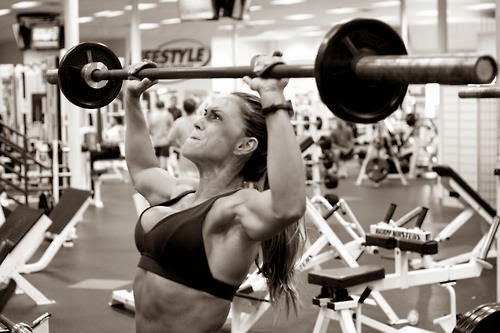
This advice applies whether you are a jacked dude or a pretty lady wearing very few clothes

Ab exercises that don't suck (and the specifics on why some do)

First, a quick rant: the sit-up and crunch (a.k.a the exercises that people who don't exercise like) absolutely suck. For various reasons. First, they involve repeated spinal flexion from a poor position, which according to top spinal researcher Dr. Stuart McGill is a fantastic way to get yourself a herniated disc, even if we perform crunches perfectly, where the motion comes mainly from the upper back (not the lower) this is still a bad idea. Then we consider what we are actually doing, pulling the rib cage down towards the pelvis; this increases thoracic rounding (i.e. the desk jockey hunch) taking our upper back and scapulae out of position, which is shitty news if you enjoy moving well or being strong or athletic or looking good. Finally, the way the crunch is performed by the vast majority makes it mainly a psoas exercise, even if it is performed perfectly it is nigh-on-impossible to eliminate psoas contribuation. This isn't terrible in and of itself, however we tend to have overly tight hip flexors from our daily sitting habits and all this extra psoas training will only accentuate this, feeding into the problem of lumbar hyperlordosis that we mentioned above. So if you want a side order of potential back injuries, hunched upper back, and belly-forward-ass-out posture with your ab training, continue with the crunches. If not, read on.

The Pudz laughs in the face of your crunches
So what ab exercises don't suck balls and won't immediately hurt your back, ruin your posture, kill your gains and give you AIDS? In general the best ab exercises are ones that require us to use our abs to stabilise our trunk against an external force trying to flex/extend/rotate us, rather than using our abs to flex/rotate us. Confused? Allow me to explain. The whole abdominal musculature is a pretty complicated set of muscular fibres running in all directions; it isn't there just to pull our ribs towards our hips repeatedly, if it was, it would look like a bicep. The abdominal musculature is there to stabilise the torso against forces from all directions, thus to effectively train it, we stress it with forces from various directions and actively contract to resist these forces and remain in neutral position. Logic all up in your face.

Again, unrelated but pretty.

First, we have the plank. This actually a move you do see regularly performed in the gym, however as with many things, it is performed in such a god awful manner that the training effect from it will be minimal. The aim of the plank is to resist the extension of the spine which gravity is exerting on you by not letting the hips sag, yet look at most people performing this move in the gym and they will be in stuck in spinal extension, gaining stability from bone-on-bone contact and not using much of anything in terms of musculature.

A common side effect of great ab development is crippling narcissism and an aching neck from constantly looking down at your own midsection. 

Fortunately with a few tweaks (commonly known as the RKC Plank variant), the plank is a highly effective exercise. Most people are familiar with the standard plank set up; you are face down, toes and forearms are the only points on contact with the ground. To perform this advanced plank version you should position your elbows directly below or slightly higher than your shoulders, contact the quads hard to maintain locked knees, contact the glutes hard to maintain posterior pelvic tilt (thus training the muscles to counteract anterior pelvic tilt), keep the neck neutral, head looking down, pulling the chin back slightly to engage the cervical flexors (which helps correct forward head posture) and finally contract the abs hard whilst breathing with the diaphragm and pull the elbows towards the toes. Maintain all these maximal contractions throughout the exercise, if done properly the body will be absolutely solid head to toe and it will be impossible for the hips to sag; you may think you are pretty good at hanging out in plank position, but I assure you that upon trying this variant you will realise that a proper plank will smoke you in about 15 seconds. Similar techniques can and should be applied to the side plank to give us a solid anti-lateral flexion exercise to go with our killer anti-extension exercise in the RKC plank.


Next we have a great anti-rotation exercise, the full contact twist or landmine twist. You preferably need a landmine in your gym to do these, but they work pretty well if you just jam one end of a barbell in a corner. With your landmine or barbell + corner set up, put a light weight on the other end of the barbell, grab the very end of the barbell with both hands and lift it over your head. Keeping your arms as straight as you can throughout, bring the end of the bar slowly down to one side, then reverse the motion, bringing the bar back overhead and repeat on the other side. This can be a tricky one to get the motion of just from a description, so check out the video below (I also don't know why the fuck the guy is wearing a Spiderman mask, but at least he is training the movement right). The abs and the obliques especially will be forced to contract hard to stop you rotating at the mid-section when lowering the weight and to allow for the transfer of force to lift the weight back into position. This is a deceptive exercise as it looks easy, but you won't need much weight to absolutely hammer your obliques.


Pallof presses and variations thereof are another great way to train the abs as stabilisers. To do the regular version of this exercise, stand/half-kneel/tall kneel side-on to a cable with a D-handle set at shoulder height or a resistance band looped over a support, grab the handle/band with both hands, holding it against our sternum and position yourself far enough away that there is decent tension in the band/cable. From here press straight out to full extension of the arms, the tension in the cable/band will be pulling perpendicularly on your hands with greater leverage as you move your hands out, this forces your shoulders to rotate, if you have been following along with the general premises we are setting out here, you should know that our aim is to resist this rotation by contracting the abs hard, hold for a 2 count, then pull the hands back in and repeat. A variant of this exercise is to set up in an identical manner, but press the handle/band directly overhead, whilst keeping the torso straight, this will train the obliques effectively through resisting the force attempting to bend your torso to the side. Similarly, setting up with a rope attachment on a cable machine, facing away from the machine, holding the rope over your shoulders and pressing overhead hits the abs hard by resisting extension.

I apologise for this guy being neither jacked or tan.

A damn hard but damn effective ab training tool is the barbell rollout, this one actually gets some attention in the average gym, which is nice to see, but again it is an easy move to absolutely butcher. This is another move that most are probably familiar with, but for the uninitiated or those who perform it with awful form, this move consists of you kneeling (preferably on a pad) with a loaded barbell in front of you, which you then grip and roll forward. Throughout the move you should keep the spine in neutral, contract the glutes and resist any sagging of the hips; roll until your body is parallel to the floor (or as far as you can manage), at this point contract the abs, lats and serratus hard and pull back to the start position. The cool thing about this exercise is the fact that in addiion to a large degree of anti-extension work from the abs, there a bonus nice bit of training for the lats and serratus (the cool looking feather-like muscles on the upper ribs).

Steve Reeves rocking the Greek God look with some impressive lat and serratus development.

A class of exercises which hit the whole midsection hard, as well as countless other muscles in the body are weighted carries. These come in many flavours, from classic heavy farmer's walks, yokes walks, front/zercher carries and overhead carries (which hit all the abs), to one handed carries with the weight (dumbell/kettlebell) held at the side with a straight arm, in shoulder rack/clean position or overhead (all of which will smoke the obliques). Weighted carries are great exercises and a worthy addition to anyone's training schedule. They are also one of the simplest moves to describe. Pick up something heavy. Keep the spine neutral and don't let the torso bend in anyway. Walk. Get Strong. Look cool as hell doing so.

Pretty damn jacked. Very, very tan.

Last but not least, we have the hanging leg raise or as I prefer to call it, the hanging hip curl, as this better describes the movement that you should aiming for. Now before anyone accuses me of being a hypocrite as this is in fact an active spinal flexion exercise, which is exactly what I shit all over the crunch for being, observe a few key differences: due to the hanging nature of this exercise, there is an extent of spinal decompression, meaning that flexion puts far less pressure on the discs; the upper back remains extended and isn't forced to round, so increased thoracic rounding isn't a worry, and finally the hips are kept in posterior tilt to limit psoas contribution.

If you look like this, you can train however you want. No one is going to ell you that you are wrong

Those differences should tell you most of what you need to know about performing this exercise, but here is a breakdown anyway: Hang from a bar with whatever grip is comfortable, now contract the glutes and posteriorly tilt the pelvis to limit hip flexor contribution. From here slowly bring the legs up, thinking more about curling the hips towards the ribs and the knees towards the shoulders, maintaining the posterior pelvic tilt throughout; lower your legs and repeat. The straighter you keep the legs in this movement, the harder it will be and vice versa, so regress/progress as appropriate for your strength levels.

I'm not going to lie to you, I'm glad that's over. Don't ask me any questions, I hate this subject.

If you need me, I'll be in my happy place.

The ruler's back - How to build a wide, thick back for power and presence

This blog post title is a re-purposed title of both a Jay-Z and the Slick Rick song that he flips. This is, of course, a Jay-Z song from back when Jay-Z was actually a good rapper, rapping like he cared about rap. Not the modern day pop artist who drops an album of half-arsed rhymes when a sponsor pays him millions of dollars to do so. It's an enviable position, but his new music is just awful; if you own Blueprint 3, do yourself a favour and delete the whole album, download the original Blueprint (illegally, he has enough money) and instantly become cooler. Jay-Z rant over, our other title song come from the fantastic Slick Rick from his 1988 classic The Great Adventures Of Slick Rick, he has since not sold his integrity, because he is awesome.

That isn't G..
This is G.
Anyway, the content of this article bears absolutely no relation to the content of those songs. I'm simply stating that the back, as in the muscles on the back of your torso, are the king in regards to physique and strength.

aaand the pictures of shapely women begin.

Back training is neglected by many gym idiots because it's not a muscle group that is staring you in the face when you look in the mirror, but back training might be the most important of all. A thick back contributes to performance in most lifts as well as giving you the coveted V-taper look and upper body width, which of course are key to looking jacked. You see gym goers that focus purely on chest and arms, causing a huge front-to-back strength imbalance and as a result walk around with forward hunched, internally rotated shoulders leading to the knuckle dragging ape walk, usually along with a degree of upper back rounding and forward head posture. Having a strong upper and mid back lets you avoid the prototypical douchebag posture; strong back muscles will allow you to pull your shoulders back and down as well as keep thoracic extension for good, upright posture. Having the requisite strength maintain thoracic extension/stop your upper back rounding also means good things for the majority of other lifts, including all positions in the squat, the lockout of deadlifts and even (somewhat ironically) proper bench position. Big and strong lats also carry over to many lifts, even when they are not working directly to move the weight; big lats give you a big base of support and stability through the mid-section and across the shoulder girdle which allows you to transfer greater power in big compound exercises like the squat, bench and deadlift.

Work the back to look big...

...and lift big

Like in the glute article, a smart first port of call is soft tissue work and activation, as due to poor posture many people have messed up lats and upper back muscles which aren't going to be able to contract to their full potential (luckily this is less of an issue than it is with glutes for most people).

Grab a foam roller, lay on it on your side with your lower arm extended overhead and and roll the over the entire length of the lat. Do this on both sides, then lay flat with your upper back across the roller, engage your abs and glutes then arch the upper (not lower) back over the roller, to open up extension in the thoracic spine. After this, move back to a neutral spine position then hug your arms across your front to rotate your scapulae (shoulder blades) around your ribs and stretch out your mid back and slowly roll up and down, rocking side to side to work out any knots in the tissues of the smaller upper back muscles. It might also be an idea to grab a small medicine ball and roll your pecs to loosen up the chesticles, so your back muscles aren't fighting against a them when you are trying to squeeze your shoulder blades together.

This is what your back muscles look like, if you happen to care

Next up is quick muscle activation as well as warming up the shoulder girdle and getting your scapula moving correctly.
First are LYTs: Grab two very light dumbells (1-5kg), lay face down on a flat or slightly inclined bench with your arms hanging to the floor, pull your upper arms back so they are parallel to the floor, your elbows are level with your shoulder and your hands are hanging towards the ground. From here slowly rotate your upper arms so your hands are level with your head, your left arm should be making an L shape, lower and repeat. Next, keeping your arms straight, raise them from a hang to above your head like you are doing the Y in the YMCA dance, lower and repeat. Now perform a similar movement but raise your arms directly out the sides so your body and arms from a T, squeeze your shoulder blades together, lower and repeat. Between 6 and 10 of each of these performed sequentially will serve to activate and warm the small muscles of the upper back including the entirety of the traps, the infraspinatus and the rhomboids.
Next are shoulder retractions: grab an empty bar (Olympic for most trainees or an EZ bar for beginners/non-advanced females trainees), gripping the bar overhand and shoulder width, hip hinge forward and relax your upper body so your arms hang. Now squeeze your shoulder blades together and down, retracting the shoulders and contracting the lats and mid back, hold for a count of 3, relax and then repeat, 8-10 reps will do.
Finally overhead shrugs: clean and press the bar overhead, alternately pull your scapula down and shrug your shoulders up as high as you can, elevating your scapula; hold each position for a 3 count for 8-10 reps.

This picture features a back, therefore it is justified

That should do for warm ups and activation, if you prefer slightly different exercises or variants of the above, by all means use them instead. For example some may prefer a band pull apart series to LTPs or using cables for shoulder retractions, if that's the case go ahead, the aim is simply to get your scapulae moving properly and your back muscles contracting.

Now comes the big moves, there are 3 main categories of movement which are used to hit the back: Rows, Pull ups/Pull downs and Deadlifts/Pulls. These are generally programmed in their standard vanilla forms (if they are performed at all) and are effective back builders, however all can be tweaked for maximum effectiveness to hit the muscles hard from multiple angles and get that barn door back. Let's get at it.

In the interests of equality and such

Rows

The problem with the bent over barbell row is not the concept, rather the average trainee's execution of the move. What you will see from most when claiming to perform a barbell row is some sort of deadlift/belly thrust combo; this achieves the aim of moving the bar from the floor and touching it to the torso, but unfortunately achieves precisely dick all apart from this. We are looking to work the back muscles and get our swole on, so clearly we need to do things a little different.

First we have what the internet has taken to calling the Pendlay row (a.k.a. a barbell row performed properly), people in the know were doing these far before Glenn Pendlay schooled fools, but either way the name has stuck. Load a barbell, preferably with full diameter plates, but resist the urge to go super heavy. With feet shoulder width apart and a soft bend in the knees, hip hinge forward keeping a flat back and grip the bar overhand, slightly wider than your shoulders. Your torso should be roughly parallel to the ground or slightly above, now create tension through your midsection and without moving your torso, pull the shoulder blades together and focus on pulling the elbows back until the bar touches just below your sternum. Lower the bar to the floor and let your scapula come forward then repeat. Performing these in a strict manner will give your upper back a hell of a workout from the scapula retraction, hit the lats hard by focussing on pulling with the elbows and work the lower back in an isometric manner by maintaining a firm torso position throughout.

The floor is really interesting

Second we have the Yates row; whereas the Pendlay hits the whole back, especially working the upper back muscles, the Yates row is a full on lat assault. Form here can be a little looser than the Pendlay row allowing for a decent amount of weight, but don't turn this into a weird deadlift-shrug-calf raise-curl combo, keep the tension on the target muscles for full training effect. Grab a barbell with an underhand grip that is about as wide as your hips or slightly narrower. Hip hinge so your torso is at around 45 degrees between vertical and parallel to the ground and from here pull the bar to your belly button, focussing on pulling with your elbows. Contract hard, like you are trying to hit a lat spread at the top of each rep. Now put the bar down and admire dem wings.

The row.
The result.

Third is the single arm dumbell row, a great mid-back and lat builder if performed correctly and nothing but a bit of ego masturbation if cheated. Grab a dumbell and bend forward at the waist until just above parallel with the ground, brace yourself with your free hand on something solid like a box or a bench and slightly bend your knees so you are solidly planted. Brace your abs and pull the dumbell to your hip by retracting the scapula and pulling the elbow back, keeping your upper arm tight to your side a throughout. Resist any urge to rotate the torso like you are starting a lawnmower, to try curl the weight up, to drop your torso to reduce range of motion or any of the other silly fuckery you see most people trying to get away with. Just stay tight, keep the torso rigid and pull with the back, squeezing the contraction at the top of the rep. Obviously repeat on the other side once the required reps are complete, unless you are going for the 'lonely male' look.

Matt Kroc is known for going heavy as hell on DB rows. He is bigger and stronger than you.


Pull ups/Pull downs

The main problem with these is that few people do them, and even fewer do them properly. First a quick note on the newly popular, CrossFit inspired 'kipping pull up'. If you are unaware as to what 'kipping' is, it consists of using a leg kick and body swing technique to generate upwards momentum in a pull up; in the BCF era (that is 'Before CrossFit'), this technique was generally just known as 'cheating' or 'shitty pull ups'. Kipping is a good means to get your head above the bar for a requisite number of reps in a given time frame, however the practice of kipping pull ups, as you see many perform in the ACF era, is not a great idea for most trainees from a few perspectives. Kipping pull ups will not work the back muscles as completely as strict pull ups due to the reliance on momentum and swinging, not contraction of the target muscles, to get you moving, furthermore there is far greater chance of shoulder/back injury or grip slippage, especially with the poor form most people exhibit. If you are a CrossFit competitor, practice of kipping is necessary, for everyone else, it is pointless and you look like a tool.

None of this silly bollocks.

Pull ups are, in my opinion and the opinion of many who carry more weight than I, the ultimate back builder. The only real problem with pull ups is the relatively steep learning curve as many trainees (especially females) can't do any. There are 3 ways around this: you can use an assisted pull up machine if your gym has one, you can tie a resistance band to the bar and loop it under your knees or you can use the pull down machine. I prefer the assisted pull up as they give a consistent amount of help throughout, whereas bands give a lot of help at the bottom where the pull is easiest and none at the the top range where it is hardest. Pull downs are looked down on by many, including myself, all the time, because I enjoy mocking people; however in truth, well performed pull downs will exhibit a greater training effect than shitty pull ups. If you can perform good quality pull ups, they do still come up trumps as the need to stabilise the torso taxes the back muscles to a greater degree, resulting in a more efficacious back training movement.

When performing pull ups, a mistake many make is overextending the lumbar spine area, this may feel like it makes the movement slightly easier but it puts you in a compromised position which is less than ideal. You should try to maintain neutral spine by bracing the abs and contracting the glutes. To really feel how hard pull ups can be, try to do all your reps with your body completely straight, as if you were performing a plank throughout and fully extend your arms at the bottom of each rep; you will quickly realise how much help you were getting from body motion and the next day you will realise just how hard strict pull ups hit the entire mid back.
Making bad form look damn good.

If I had to pick the best pull up movement, it would be the ring pull up followed closely by a neutral grip pull up (or pull down). The use of gymnastic rings allows for free rotation of the hands so the arms can move into their most comfortable groove during the movement and minimise elbow stress. The use of rings also allows for a greater range of motion and a more 'natural' feeling pull as you can pull yourself up between your hands, as well as a strong lat contraction by pulling the upper arm back along the side of the torso. Finally, the extra stabilisation necessary for ring work and the ability to pull your hands in laterally as well as vertically allows for a greater lat contraction. The position that most people's hands will drift to in a ring pull up will be one closely resembling a neutral grip pull up, as such these carry the majority of the same benefits as ring chins, allowing for a strong lat contraction and low joint stresses.


The other type of pull I recommend is a classic wide overhand pull up. I do feel that some go too wide on these, as you end up just robbing yourself of range of motion and making the movement feel more awkward without really increasing lat recruitment; I recommend setting your grip so your arms are around 30 degrees from the vertical when you are at a dead hang. To really get the strongest contraction out of these, at the top of the movement, lean back and pull the bar towards your sternum. this little tweak can be the difference between an easy set of pull ups and the strongest mid-back contraction you have ever felt.

Taking jacked and tan to new levels.


Deadlifts/Pulls

A properly performed conventional deadlift works the vast majority of your body, your hands and forearms work hard to grip the weight, your entire upper and mid back stabilises your shoulders and stops you rounding forward like the hunchback of Notre Dame, your lower back and abs strongly contract to keep a rigid mid-section and effectively transfer force from the legs (especially the hamstrings and glutes) which act as the prime movers. Many like to put conventional deadlifts on 'back day' as it allows them to start with a heavy strength movement and doing both squats and deadlifts on 'leg day' leads to a shitty following few days once an appreciable amount of weight is being used for both exercises. That is absolutely a valid way to approach programming, however if we are looking to hit the back hard (which we are, read the damn title), with a few variants and borrowed ideas from Olympic weightlifters we can shift the focus to really tax the mid and upper back and be less stressful on the lower back and legs.

You don't set World records with a puny back.

If you feel like shifting a shit lot of weight give rack/block snatch grip deadlifts a go. Set the bar up in a rack or on blocks (preferred), set your feet feet around shoulder width or a little narrower, keep your back flat, hinge at the hips, bend the knees and grab the bar with a wide grip. If you are working in a rack you obviously will have to go a bit narrower than the rack so you don't smash your fingers, if you are working on blocks go for a grip as wide as you are comfortable, index fingers on the outer rings is a good starting point for most. From here extend at the hips and knees and strongly contract the lats to pull the bar into your hips, reverse and repeat. From the explanation this may not seem like a big back builder but the wide grip puts some serious demands on the whole of the upper and mid back, if you still doubt, give multiple heavy sets of these a go and call me in the morning so I can laugh at your pain. Performing these from slightly above the floor allows for the use of more weight and stops any ugly back rounding which can arise when snatch grip pulling from the floor, if mobility is lacking.

Tell Lu Xiaojun that snatch pulls aren't an effective back builder

In a similar vein to the above but with more of an upper body emphasis is the snatch grip high pull. Set up exactly as above, either on blocks or from the floor but with less weight. Extend at the hip and knee explosively to lockout at which point you shrug your shoulders up hard and pull the elbows up and back to launch the bar up to around nipple height. You won't be able to lower the weight under control so don't try as you'll end up hurting yourself, either let it fall to the floor and repeat or catch it in the hang position and rep away from the hang (which I prefer). In my opinion these are a hugely underused back builder amongst most trainees and you should feel privileged that I am sharing this secret to crazy gains with you peons. For all heavy snatch grip movements you will almost certainly have to use straps unless you have insane grip strength or are happy to use hook grip and mash your thumbs to a pulp.


Other Movements

I'm still not done, but feel free to leave. You've clicked on the page and I have the view so at this point I literally do not care.

An exercise that would not occur to most as a back builder but can put a serious beating (in a good way) on the mid back is the front squat. While obviously predominately a leg exercise and as such maybe not a good fit for 'back day', regular front squatting will build the volume of back work you are performing leaving you with a stronger mid back. Luckily I have talked about the technique involved in the front squat at length here. The key part of the move that hits the mid back is the need to force the elbows up and stay in thoracic extension to avoid dropping the weight, which necessitates a strong mid back contraction. The heavier the weight gets, the harder your mid back will have to work to keep your upper body from folding like a deck chair. Thus we can use heavier weights to elicit more of a back training effect, an effective method for focussing on the muscles responsible for thoracic extension is the front squat iso-hold. This is incredibly simple, but deceptively demanding on all the muscles surrounding the scapula. To perform, simply un-rack a heavy weight in the front rack position, hold it for a 10-15 count, making sure to strongly force thoracic extension (push your chest up/out and shoulders back) and then re-rack/dump the bar. It is probably a smart idea to set the safety bars just below front rack height. To others, you may look like you are just pussying out on a set of front squats, but fuck 'em, they'll know who's boss when you have to turn sideways to walk through door ways.

The Rock requires double doors throughout his house*
(*I made this up... but probably)
The final  (I swear) exercise which I recommend for back is the reverse/rear delt fly. This is one that you actually see performed fairly often, however here I am going to recommend something you will pretty much never hear me say otherwise: use more weight and looser form. I tried this out after a recommendation from the gigantic John Meadows and found it to hit the rear delts and entire upper back far harder than strict, light raises. To perform these, lay face down on a slightly inclined bench with fairly heavy dumbells in your hands, in one motion, pull your shoulder blades together and elbows back, keeping the arms fairly straight. It is essentially an explosive performance of the T movement from the warm up detailed way up top; don't expect to bring the weights all the way up to in line with your body and certainly don't expect to be able to pause at the contraction, just rip the weights back explosively until your whole upper back is on fire, aiming for fairly high (15-20) reps. Finally, quickly look in the mirror and feel good about life.

Now get crazy-eyed and crush stuff.


You gotta testify because the booty don't lie - Glute training for form and function

The title is from Janelle Monáe's song Q.U.E.E.N. featuring Erykah Badu; which starts as some funky, soul-filled, R&B guilty pleasure and ends with Monáe dropping a verse that puts 99.9% of rappers to shame.

Quadruple Olympic gold medallist Allyson Felix showing that good glutes are what you need for athletics and aesthetics.
Bootys, butts, bums, glutes; call them what you will, as Miss. Monáe states, they don't lie. Having a strong and well developed posterior is desirable for both sexes for various reasons. The glutes main roles are as the prime movers in hip extension, hip abduction and in external rotation of the leg, they are mainly fast twitch with huge force production capability and high resistance to fatigue. In layman's terms this means your bum is involved if you want to turn your knee outwards, push your leg out to the side or behind you. Once you realise the function of the glute it becomes clear why they are so important for peak athletic performance; sprinting, jumping, lunging, direction changes/side-stepping, skating, it's all driven primarily the the glutes. Glutes are also important in a more passive way, giving stability to the hips, pelvis and lumbar, maintaining proper posture through leg and pelvic alignment to keep your 'lower cross' in balance and ward off the back pain and decreased performance that accompanies anterior pelvic tilt. In fact, there are multiple studies directly linking weak and/or inhibited glute function with lower back pain.

Enough science shit. Time for gratuitous booty pictures.
Boring phsiology over with, the main reason we want good glutes is because of how they look. Whether a man is a boob guy or bum guy, they appreciate a good set of glutes, but also likewise, women don't want a pancake-assed man, sporting strong glutes is just as important for any male as it is females. If you are a girl reading this thinking that you don't pay much attention to the junk in a guy's trunk, you probably should. Remember a few sentences ago when I was talking about glutes being the muscle responsible for hip extension? Well, big, powerful glutes mean big, powerful hip extension... maybe something to think about.

I would say this is for the ladies but with the amount of men with huge guy crushes on Klokov, I'm not so sure.
Unfortunately, due to most of us spending many hours of the day sitting on our bums and not doing shit, we have terrible muscle tone (in the strict usage of the term, that is, passive contraction). Our glutes are lazy, they are overly relaxed from not doing anything all day and as such, when we want to call them into action they don't contract and produce force to their full potential. Further to our glutes being sleepy through under-use, they suffer also from 'reciprocal inhibition' from our hip flexors. The angle of our hips when we sit means our hip flexors (located in the front 'hip crease') are chronically flexed and short; when a muscle contracts, the opposing muscle relaxes, thus our tight, contracted hip flexors cause our glutes to turn off. What also happens with many people is that here the piriformis muscles will 'pick up the slack' for the glutes, working overtime and as such also becoming chronically tight. Therefore, the first step for most should be the activation of the glutes, stretching of the hip flexors and potentially soft tissue work to roll out any knots and maintain good tissue quality in our prized assets.

Whoever is in charge of Reef's marketing is a true visionary.

Glute activation routine

Soft tissue work (optional) - this is easy but generally not fun. Get a firm foam roller or a lacrosse/hockey/tennis ball, put it under your bum and slowly roll over the whole glute area. There will be 'hot spots', especially around the piriformis area which usually manifests itself as some hella pain when you roll over the dimple on the outside of your cheek. Work on these until pain subsides and you feel the muscles loosen and any knots or tightness release. The enjoyability of this increases greatly if performed in a private setting with a partner.
Pictures of foam rolling are not as enjoyable as this.
Hip flexor stretches - Perform a deep lunge with your rear knee on the floor, push your hips forward until you feel a pull in the front of the hip of the rear leg, being careful not to let your lower back over-arch. Hold for 20-30 seconds a couple of times each side, this is a useful stretch to do multiple times a day if possible.
4 point extension - On all fours (hold the jokes please), extend one leg straight behind you until it is parallel to the ground or just above and squeeze the glute hard for a 3 count, repeat on the other side.
Not perfect form here, but she can do whatever she wants as far as I'm concerned.
Half-keeling contraction - get down like you are going to pop the question, then contract the glute on the kneeling side hard, thrusting your hip forward a few inches. Focus on the contraction, not the thrusting movement as you don't want the force to come from your lower back. It is helpful to put a hand in the glute to make sure you can feel the contraction and change in shape of the muscle.
Glute bridge - This builds the foundation of many of the great glute building exercises, so it is important that you get a good feel for it. Lie flat on your back with your legs at somewhere around a 60-90 degree angle and your feet flat on the floor. From here push through your heels and contract your glutes hard to push your hips up so your body forms a straight line from shoulders (which are in contact with the floor) to knees. Make sure it is a hip hinge and not some messed up spine rolling motion that is getting you from the start to the end, also make sure to again not over-arch the lower back.
I'm going to be stealing loads of technique pictures/videos because I can't be bothered to make them myself. Deal with it.
Hip hinge - This again is a foundation move and is probably the most important single movement to master in all of weight training. Stand with feet shoulder width apart and knees unlocked, cross your arms on your chest or place your hands on the back of your head (you can add a weight if you are a stronger trainee). From here, bend at the hips, pushing your bum backwards whilst keeping your lower back flat. You should feel a stretch in your hamstrings and glutes, when you feel this, powerfully flex your glutes to reverse the movement, squeezing hard at the end like you are trying to crack a walnut between your cheeks.
Clamshell - Lie like you were setting up for a glute bridge and got flipped on to your side. From here, keep your feet together and rotate your upper leg outwards so your knee points towards the ceiling whilst keeping the rest of your body still, stronger trainees can wrap a resistance band around their knees. It's probably best to avoid eye contact with anyone whilst doing this one.
Alternatively, maintain eye contact throughout to really woo a potential mate
A run through of 8-12 reps of each of these moves (in whatever order you like) fits well as a warm up for most, some less experienced trainees might find these feel like a workout in and of themselves, that is okay, a few rounds of these exercises plus a few of the less advanced exercises from below will make a great beginner training session.
This isn't anything to do with what I'm describing, I just like it.


Glute building moves

SQUAT!!!! - No shit right? If all the borderline pornographic pages on Facebook haven't clued you in, squats build good bums. Squats are indispensable for their total leg building properties, they may not be the prime exercise for a focused glute workout, but still should absolutely be a staple in your routine. I've written all about squats previously in a 2 part article which you can find here and here. A small tweak which is useful when looking for specific glute work is to focus on pushing the glutes back in the descent and then contracting hard and bringing your hips forcefully forward over your feet, squeezing hard at lockout.
Dat lockout.
Deadlift variations - All deadlift variants will hit the posterior chain, including the glutes, hard; however some variants will cause people with weak glutes to over-compensate with the hamstrings and lower back muscles, whereas other variants are far more conducive to feeling the glutes working. The standard conventional deadlift from the floor is a lift that I feel falls into the first category for a large percentage of people, at least until the lockout portion of the lift. Therefore, whilst the full conventional deadlift should again be a staple in your routine, for glute building purposes there are variants which can benefit us more.
Multiple powerlifting world record holder Dan 'The Boss' Green showing that big glutes mean big lifts

The first of these is deadlift lockouts/rack pulls. Set the safety pins in the power rack to around or just above knee level and place a loaded bar on the pins. Set your feet to your normal width for deadlifting, bend at the hips and knees whilst keeping a flat back, grip the bar and forcefully lock out the weight by contracting your glutes hard and pushing your hips forward (just like in the 'hip hinge' warm up) while also pushing through your heels to lock out your knees, again take care not to over arch your lower back. Lower the weight (don't try to lower it too slowly as this can be sketchy) to a dead stop on the pins, reset and pull again. You will likely find that you can use large amounts of weight here and feel a pretty strong glute contraction.
Second we have Romanian deadlifts or Dimel deadlifts, these two are very similar in execution, with a Dimel deadlift essentially being Romanian deadlifts performed for high reps with a fast tempo. Either way, set up as you would for a normal deadlift with a fairly light weight, then lift the weight to the lockout position. From here keep a straight back and a soft bend in the knees, push the hips backwards until you feel a stretch (it might not be a very large range of motion), then forcefully reverse the motion by contracting the glutes. It is essentially the hip hinge from the warm up with a weight in your hands. The differences between this movement and the rack pull are here there is a lesser degree of knee bend, you lower the weight under control and do not pause between reps.


Glute bridges and hip thrusts - I really love squats and deadlifts, but I must admit, whilst bridges and thrusts make you look like the guy who forgot how to gym, they really are the king when it comes to focussing on booty building. There are many variations of these to cater to all levels. The basic movement as outlined in the warm up doesn't change. To make this even easier (which most shouldn't really need) you can start with your feet elevated on a bench, to make it harder lay your upper back on a bench. For most people these bi-lateral, unloaded bridges will still be too easy to use as anything other than a warm up. The obvious solution to this is to load up, go unilateral or a combination of both!
For weighted glute bridges, load a barbell with at least one full diameter plate, lay on the floor, roll it over your legs to your hips and set up as you would for the glute bridge. Get the barbell fitting snug in your hip crease, secure it with your hands and bridge, contracting your glutes hard and lifting the barbell with your hips, squeeze hard and briefly pause at lockout to really feel that booty working hard like you never have before.
In short: you hump the bar
Weighted hip thrusts are identical in the mechanics of the movement, however here your upper back rests on a bench (pick one that is nice and padded). This gives you an increased range of motion and a stronger contraction at lockout, generally making it a better choice of movement if you have the available equipment. It is recommended that you pad the bar for these otherwise they can be uncomfortable, especially at higher weights. I recently did 140 kg for reps with an un-padded bar, which was a bloody stupid idea. Be smart and use protection, kids.
Just bar hump your way to a better booty
As I said before, the other way to up the ante on bridges/thrusts is to go unilateral. The easiest of these would be the single leg glute bridge, it's not rocket surgery, set up like you would for a normal glute bridge, push to the top of the movement then straighten the knee of one leg so it's off the floor, lower yourself then push through the grounded foot and flex the glute hard to bring your hips up. Repeat with the other leg. Next up in terms of difficulty we have the single leg hip thrust, which by now I have faith that you can figure out yourselves. Then if we really want to push things, we can add weight to either of these variations. The great thing about the unilateral variations is that they tend to not need a lot of added weight so are much more comfortable when using a barbell compared to bilateral variations; personally I have been using sandbags for these which works nicely, but you can use whatever works for you; barbell, dumbell, EZ bar, sandbag, just grab something, throw it over you hips and hump upwards to build that bum.


The above exercises allow you to move the most weight and I feel should make up the majority of your glute training, making them pretty much a lock for your routine. There are a few other honourable mentions, that are very worthy of a place as further accessory movements if you have the equipment and energy to do more.
It's been a little while since the last gratuitous glute shot.

Walking Lunges/Bulgarian split squats - I group these together as they are mechanically fairly similar. Both can be performed with bodyweight (for beginners), holding dumbells (which is easier for balance as long as you can hold the dumbells) or with a barbell (which is necessary with larger weights). To perform walking lunges, pick up your dumbells or position the barbell across your traps and take a large step forward with one leg. Sink down until the rear knee just touches the ground (at this point ideally your front shin should be roughly vertical, learn to gauge your step so this is the case) and then drive upwards, contracting the glutes. Step forward with the rear leg moving into the lunge position with the opposite leg forward and repeat.
I couldn't find a lunge photo with sufficient nudity.
If you lack the space for walking lunges, Bulgarian split squats are an ideal alternative, I slightly prefer lunges as there is less of a balance demand, meaning you can focus more on contraction, both exercises will whip your butt into shape though. To perform the BSS set up a bench at around knee height at the back of the platform which you are using, grab your dumbells/barbell, stand with your back to the bench, then lift one leg behind you and place the top of your foot flat on the bench. Ideally for maximal glute recruitment you want to be as far from the bench as you can be without having an excessive stretch on your hip flexor in the bottom of the movement or experiencing any over arching of the lower back. Sink straight down until your rear knee lightly touches the floor (you might want to put a foam mat under your knee) then drive straight back up, contracting your glutes to lockout. Descend for subsequent reps without moving your feet. Switch legs and repeat.
Bulgarian split squat as demonstrated by some bald jacked guy with a terrible tattoo 
Back extension/Glute ham raise (GHR) - These two again share similar ground in terms of mechanics, with a GHR essentially being a back extension plus a hamstring curl. Both of these exercises also need specialised bits of kit, which if your gym is lacking you are pretty much out of luck, some people try to 'hack' the movements and perform them without the specialised equipment (like performing a back extension off a bench), but these tend to not feel right and don't do the movement proper justice. That said, if your gym has a back extension rig/roman chair, you're in luck. You perform the back extension by hooking you feet under the pads/bar at the bottom and leaning forward on the support pad, the top of which should be a couple of inches below your hip crease (look at the picture below if that didn't seem to make sense). You start with your body fully straight facing the floor, from here hip hinge until you feel a stretch in the hammies and glutes then (like I keep saying) forcefully contract your glutes and push your hips forward to pull yourself back straight to lockout, once again taking care not to over arch the lower back . This exercise is also known as the hip extension which I far prefer, as the motion should be coming entirely from the hip, not the spine (although your spinal erector muscles will still be working to keep your back straight). This is essentially a super strict hip hinge at an angle which causes you to work harder against gravity. If you are strong, you can load these up by holding a dumbell/plate behind your head or across your chest, alternatively you can position a barbell in front of you and hold it with a snatch (very wide) grip, which is a great posterior chain exercise for more advanced trainees.
Gazing majestically into the distance is an important part of this exercise
Unfortunately GHR machines are far more scarce at gyms that they should be, as the movement is an absolute winner for fully building the posterior chain. If your gym does happen to have a GHR machine, you are living the dream, use it regularly and use it lots, also thank your gym owner for knowing his/her shit. A GHR rig looks a bit like a back extension rig (above), with a few differences in its design and therefore use; the pad is in a 'half moon' shape and sits lower on the quads with the knees just behind the pad, this allows you to perform a hip extension (squeeze the glutes) and then a subsequent hamstring curl as the point of contact between your legs and the pad 'rolls' over the rounded pad. The foot pads are also raised to the same level as the hip/quad pad, so you should be roughly parallel to the floor at lockout of the hip extension and roughly vertical at the end of the hamstring curl. That description might be a little lacking so here's a picture of a good looking lady doing the movement.
Good work, good looking lady.
I'm feeling extra generous here, so I will also write some basic outlines of sample workouts for a glute focussed 'leg day'. These are just ideas, so feel free to use them or completely ignore them and just pick bits you like from the article to fit into your own routine, I won't be offended.

Beginner glute workout

Glute activation routine  - 3 rounds (only roll/stretch once)
Squats - 3 sets x 8 reps with ~70% of 1 rep max (or a weight which is challenging but lets you complete all reps with good form)
Rack pulls - 3x5 ~75-80% 1RM
Hip thrust/glute bridge variant - 3x8-12 (choose a variant which allows you to get a challenging 8 to 12 reps with good form, I'd recommend unloaded uni-lateral hip thrusts for most trainees with a focus on good form and feeling the contraction of the glute)
If cardio is desired, using the stepper and performing big steps can further blast the booty.

It might seem hard, but for this, it's totally worth it.

Advanced glute workout

Glute activation routine - 1 round
Squats  - 5 work sets (work up to 5 RM with good form, decrease weight by 10% and perform another set, aiming for 6 reps with good form, decrease weight by another 10% and perform 3 more sets, aiming for 8 reps with good form)
RDL/Dimel deadlift - 3x8-12
alternatively Back extension - 3x8-12
alternatively GHR - 3x6-12 ( the wider rep range is due to the difficulty of GHR; if you cannot perform 6 reps un-weighted, get stronger using other exercises first)
Weighted hip thrust/glute bridge variant - 3x8-12
Walking lunges - 3 rounds of 8-12 lunges each side (space permitting)
alternatively BSS - 3x8-12 each side
Stepper can again be used if for some reason you want to do cardio.

So there you have it, DC's guide to great glutes. Hopefully moving into 2014 we'll see none of this...
Just. So. Bad.
and more of this...
She's bloody mental, but she's got some booty.

A Christmas f**king miracle - How to enjoy the festive season without adding extra padding

As usual, we have a post title lifted from some of my favourite hip hop; this time it is so called after a track from El-P and Killer Mike as Run The Jewels' self-titled, free, highly critically acclaimed début album.


So 'tis the season of rampant consumerism and terrible songs on loop in celebration of the birthday of a guy that was essentially the David Blaine of 2000 years ago, but his tricks were apparently so good, people are still going on about them. There are however, some good aspects of this holiday season; time off work to relax, see friends, enjoy time with your family and most importantly stuff delicious food into your fat face until you are uncomfortably full, then repeat hours later. While most people don't have 5 kg of extra fat on their Christmas list, that seems to be pretty much what they get every year. What this article will hopefully share with you are some strategies that you can use (along with some willpower) to make sure this year you can have a lean Christmas (in the good sense), as it's not 'bulking' if you are just getting fucking fat.

Jacked Santa said all you're getting for Christmas is the gift of "Stop being a little bitch"

For most people the 24th - 31st of December become an absolute physical shit show, where the most activity they get is repeatedly lifting copious of food and alcohol from the table to their mouth. While short overfeeds can actually be very useful in the war on fat (as explained in a previous article). Week long food binges are not. When you overeat a whole host of processes are triggered in your body; insulin levels rise which decreases the mobilisation/oxidation of fat and increases the storage of nutrients as fat/glycogen/muscle. Parasympathetic nervous system activity is increased, which means you feel relaxed and sleepy and probably can't be bothered to move. Thyroid hormones (T3 and T4) are released in increased quantities, this will serve to temporarily up regulate metabolism as your body attempts to burn through the piles of food you have just eaten. Thermogenesis will increase due the the thermic effect (TEF) of all the food you have just eaten; ever had meat sweats after eating half the turkey? That's TEF. As we can see, not all of these things are bad, thus is why short bursts of overeating work. It is when overeating becomes chronic (say, for a week) that the negative aspects such as high insulin and down-regulated fat mobilisation will become real issues. Furthermore, adding alcohol to the gamble can really start to mess with things as this will down-regulate both carbohydrate and fat oxidation, meaning pretty much everything you eat will go straight to storage.
Turns out Santa has a pretty sweet deal

This leads us to my first tip: endeavour not to eat big and drink big on the same day.
Preferably, keep the alcohol consumption low in general, but I know for many this just won't happen. Instead, when you are sitting down for your big Christmas meal, keep in mind that if you want to get stupid drunk with only your family as company, you are fucking weird. Also keep in mind that if you are drinking, all those delicious calories are going to end up on your belly/ass/hips/chins/bingo wings/eyelids ...you get the idea. Most will then probably be going out for drinks with friends on some other day in the festive period (Boxing Day Pub Crawl, anyone?), if this is the case, I am not going to tell you to moderate consumption (other than don't kill yourself), moderate your food intake instead. Luckily, I have already written at length about this here. In general, eat loads of veggies and lean meat, keep fat intake very low throughout the day and only eat a moderate amount of carbs at least 3 hours before you plan on drinking. Then when you are getting boozy, preferably drink low-calorie drinks, don't eat during/after drinking, just hydrate well when the night is done and go to sleep.

Andreas Cahling has no time for binges like you weak people.

On to the second tip: Do some exercise around your food binge.
This tip is split into two, the first option is preferable but is potentially not feasible on Christmas day. The second option is your back-up plan and the only thing stopping your from implementing that is pure laziness. Option 1 is to perform a glycogen depleting workout prior to your food binge, the best way to deplete your glycogen stores will be an intense, hi-rep weight lifting (15-20 reps) workout, hitting as many major muscle as possible in your workout. This glycogen depletion will mean that your muscle's "fuel tanks" are running low, as such, a large portion of the approaching food-gasm will end up re-fuelling your muscles, rather than sitting on your waistline. Now, I realise that this is impractical for most people as not everyone will have the time or facilities to perform such a workout on Christmas morning. Enter Option 2; around half an hour before and an hour after you inhale the same amount of calories that the entirety of Ethiopia has consumed this year, perform 60-90 second contractions for a few major muscle groups. I'd recommend something like a set of squats, a set of push ups (or a scaled back version) and a set of inverted rows. This will only take a few minutes but will serve to active so-called GLUT4 receptors in your muscle by moving them to the surface. GLUT4 receptors are responsible for directing glucose after ingestion, by performing these brief exercises you are able to preferentially direct the food you eat towards your muscles and lesser so towards your belly, albeit with less efficacy than if you took option 1.

Sure he's old and fat, but he has the right idea

Tip number three: Try to minimise the insulin response from your meal.
There are a few ways to do this, the first, best and arguable easiest is to primarily eat meat and veg with lesser quantities of starches and sugars; meat is the best part anyway, you can disagree if you are content with being wrong. By not going too overboard on the starchy and sweet stuff, your insulin won't go too mad, which will go a great ways to limiting the amount of fat you store (if any). Another strategy is to have a planned first meal which is high in protein and fibre, but not fat or simple carbs; this lets you take advantage of the "second meal effect". This refers to the fact that following a high fibre meal, a subsequent meal will have a lower glucose and insulin response as well as less effect on triglyceride levels, all of which are beneficial if you wish to remain jacked and pale (because, really, who is tanned at this time of year?). A third strategy which is easy to implement is to drink green tea throughout the meal, this has a two-fold effect; first the green tea flavanols serve to improve your response to secreted insulin. Second, the caffeine serves to speed up the transit of food through your digestive tract, whilst this isn't optimal when we want to extract all the nutrition from our food, but when we are hugely overeating, a degree of incomplete digestion serves as a convenient damage control strategy. A final strategy is to consume citrus (grapefruit, lemon or lime) as part of your meals, as these foods serve to decrease the insulin response of a meal, probably the easiest way to do this is to squeeze half a lemon in every cup of green tea that you should already be drinking.

Anyone who thinks that potatoes come close to being the best part of this meal should be sectioned

Tip number four: consider implementing intermittent fasting on the days around your binges.
I have previously discussed intermittent fasting at length. When implemented the day after a food binge, IF just feels pretty natural as you will probably be a disgusting bloated mess, so a morning of not eating, just drinking water and giving your digestive system a rest is probably exactly what you feel like doing. You can also implement a longer than normal fast as a means of calorie restriction to help offset the huge calorie surplus on binge days. As an added bonus a fast will also serve improve insulin sensitivity, which will play into tip 3.

So there you have it, a few dietary tips to reduce the impact of the holiday spread. So Merry Christmas, Happy New year and don't get too fat.